Ferry Rostock (Germany) ⇄ Gedser (Denmark) times, fares, duration
Rostock–Gedser ferry timetableGeneral times
⚠️ General times, subject to change: from one date to the next these times shift by a few minutes, and the operator sometimes swaps ships. Exact times are shown when you book.
How much does the Rostock–Gedser ferry cost?
How these figures were read
- Two hours at sea instead of forty-five minutes: on a long drive that is a genuine break, meal included.
- In summer, a sailing every 2 hours 15 minutes during the day, from 6:00 onwards — you can build your timings around it without contortions.
- From Berlin or eastern Germany, Rostock is far quicker to reach than Puttgarden: about a hundred kilometres less driving.
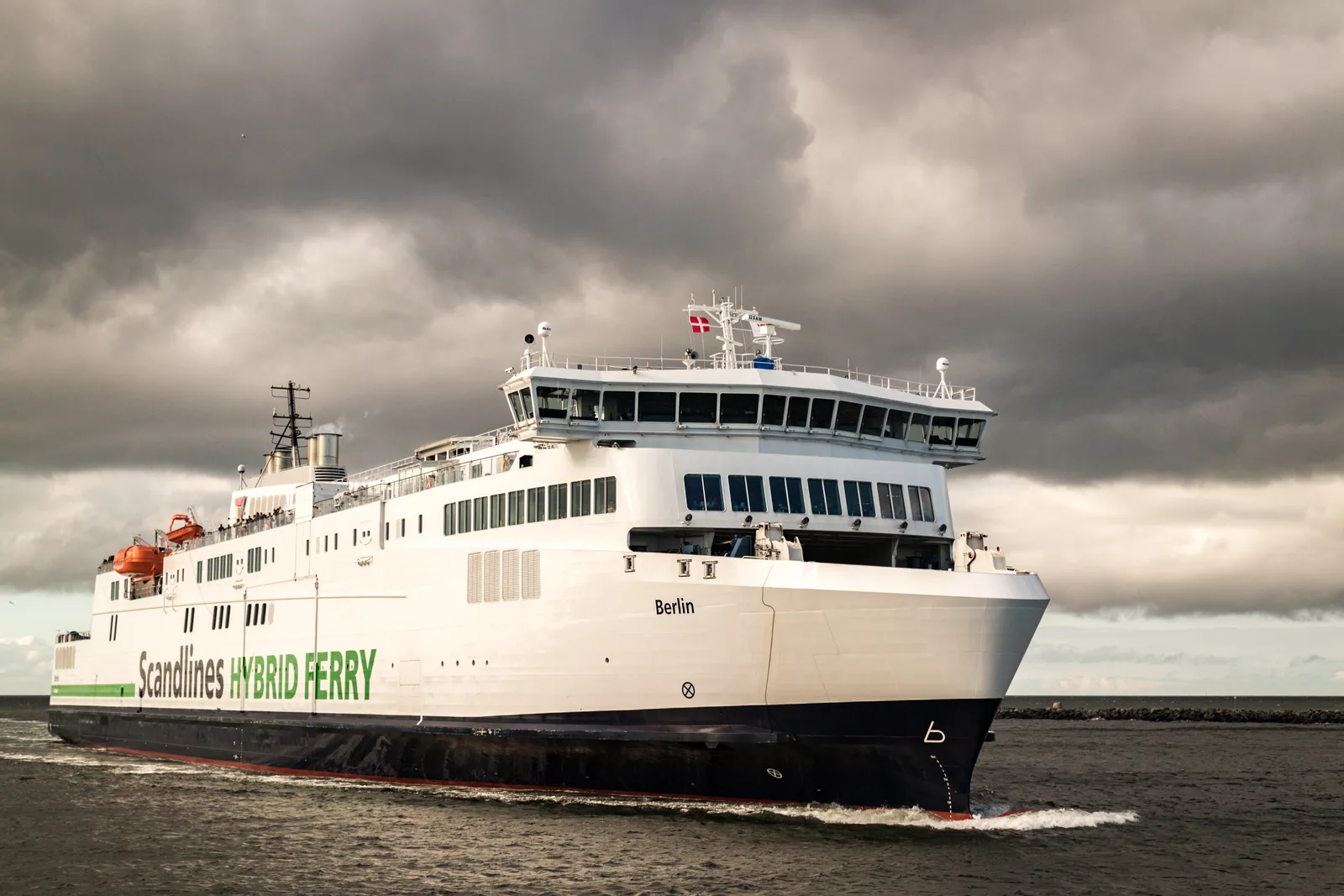
- Two hybrid ships, the Berlin and the Copenhagen, with an extra vessel on Saturdays in high season.
- Dearer and longer than Puttgarden – Rødby: €65 to €138 against €48 to €67, for two hours instead of forty-five minutes.
- The price doubles between November and August, while the Puttgarden shuttle moves by only 40%. Only Copenhagen – Oslo swings harder.
- The winter timetable is half as full: one sailing in two is not operated, which means a ship every 4 hours 30 minutes instead of every 2 hours 15 minutes.
The Rostock–Gedser ferry in detail
The eastern twin of Puttgarden – Rødby, and the choice between the two is not made at the port but long before, out on the motorway: come up through Hamburg and it is Puttgarden; come up through Berlin, Dresden or Poland and it is Rostock, saving you a good hundred kilometres.
Two hours at sea instead of forty-five minutes, on the hybrid ships Berlin and Copenhagen, with an extra vessel on Saturdays in high season. The length is not a drawback: on a two-day drive, two hours sitting down and a hot meal beat another hour at the wheel. In summer there is a departure every 2 hours 15 minutes during the day, the first at around 6:00 — you can build your timings around it without contortions, as long as you are not aiming for the middle of the night.
You land at Gedser, at the southern tip of the island of Falster. Copenhagen is two hours away by road, Hirtshals — the departure point for four of the Norwegian routes on this page — six and a half hours. So it is never an end in itself: it is the link that puts you on the right continent, and it pairs naturally with Frederikshavn – Göteborg if you carry on north through Sweden.
On price, this is the route that swings hardest after Copenhagen – Oslo. €65.30 for two people and a car on Thursday 12 November, against €125 to €138 on Wednesday 12 August: the fare doubles from one season to the other. In August the time of day counts too — €138.30 in the morning, €125.12 on the 20:15 departure, thirteen euros for exactly the same crossing. In November the time changes nothing: the same amount on every bookable departure. One thing to know if you travel off season, though: the winter timetable is half as full as the summer one. The engine shows the same times all year but greys out the departures that are not operated — on 12 November, only those at 6:00, 11:15, 15:45 and 20:15 were bookable. So count on a ship every 4 hours 30 minutes off season, against every 2 hours 15 minutes in August: still comfortable, but a little less forgiving of last-minute plans.
Rostock–Gedser ferry map
Route map…
Preparing your Rostock–Gedser crossing
Hotels on both sides, activities and car hire
Rostock–Gedser ferry: frequently asked questions
How much does the Rostock – Gedser ferry cost?
Expect €65 to €138, depending on the season, for two people and the car. The price is dynamic: it depends on the date, on the departure time and on how far ahead you book. Recorded on 1 August 2026 in the operator's booking engine, it gives an order of magnitude, not a guaranteed fare.
Do you need to book?
This is not a route you have to book months ahead, but booking online costs less than buying at the last minute. Watch the season: the winter timetable is half as full as the summer one, so check the time of the last sailing. Go to the booking site →
How long does the Rostock – Gedser crossing take?
The crossing takes 2 hours. Every 2 hours 15 minutes during the day in summer, roughly every 4 hours 30 minutes in winter; first sailing at 6:00.
Where do you land, and what is there nearby?
Gedser, on the island of Falster. Copenhagen is 2 hours away by road, Hirtshals 6 hours 30 minutes.
Who does this crossing suit?
Anyone heading north via Berlin, Poland or eastern Germany, and anyone who would rather sit for two hours than drive for another one.