Most searched crossings
Eleven routes link the continent to Norway, or bring you within driving distance. The fastest takes 2 h 25 from Hirtshals; the longest crosses the North Sea overnight, cabin included.
Seeing the fjords from the water
A car ferry carries vehicles; a cruise carries the view. People often do both on the same day — the Geirangerfjord and the Nærøyfjord are seen from a boat, not from behind a wheel.

Classic cruise on the UNESCO-listed Geirangerfjord, past the Seven Sisters waterfalls, to Hellesylt. Norway's most famous fjord.
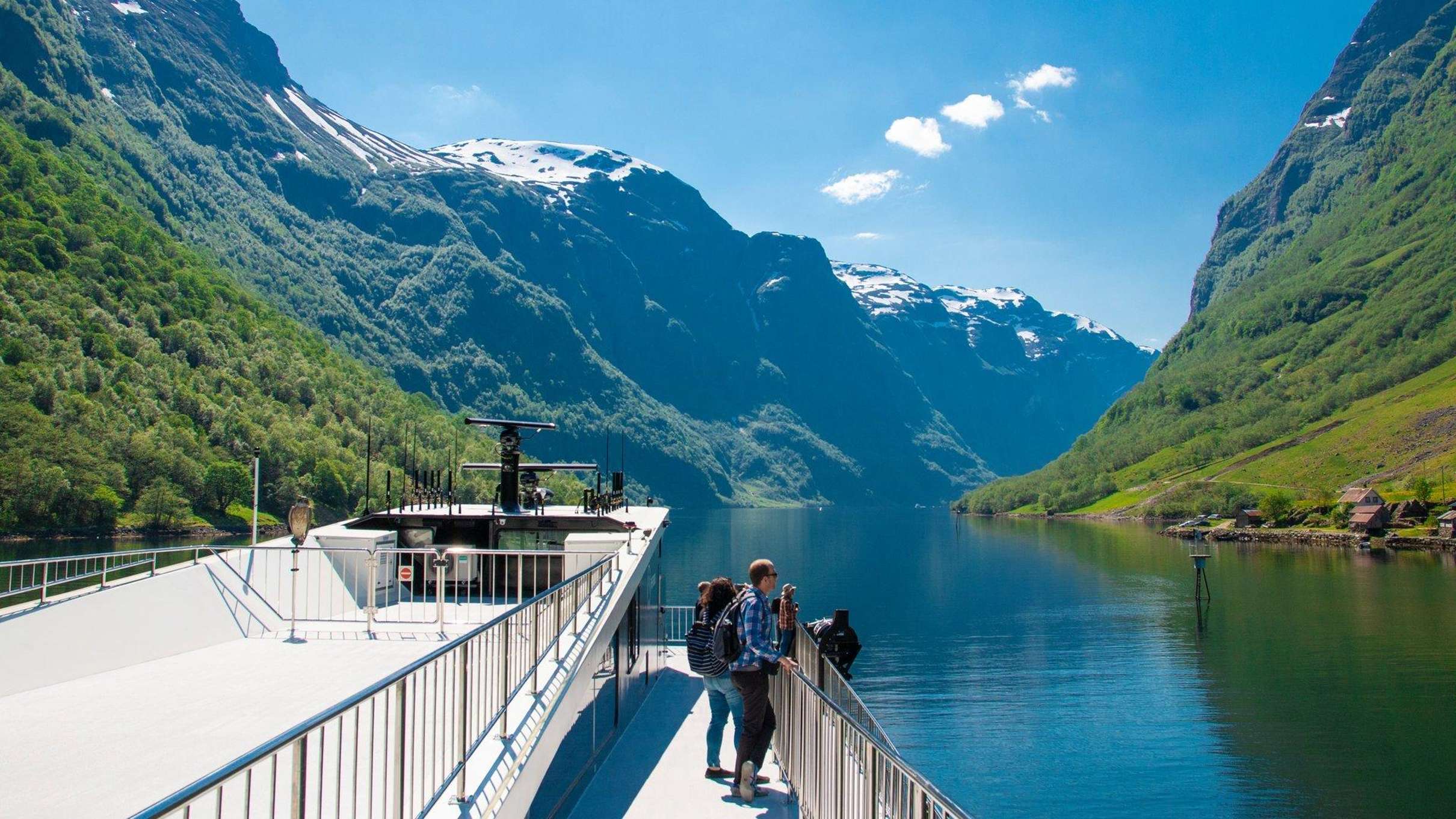
Norway's flagship day out from Bergen — a cruise on the UNESCO Nærøyfjord, the scenic Flåm Railway and the Njardarheimr Viking village.

Cruise from Bergen to the Mostraumen strait — narrow fjords, waterfalls and tidal currents aboard a comfortable boat. About 3 hours.

Silent electric-boat cruise into the Lysefjord, beneath Preikestolen (Pulpit Rock) and the Hengjane waterfall. Departs from Stavanger.
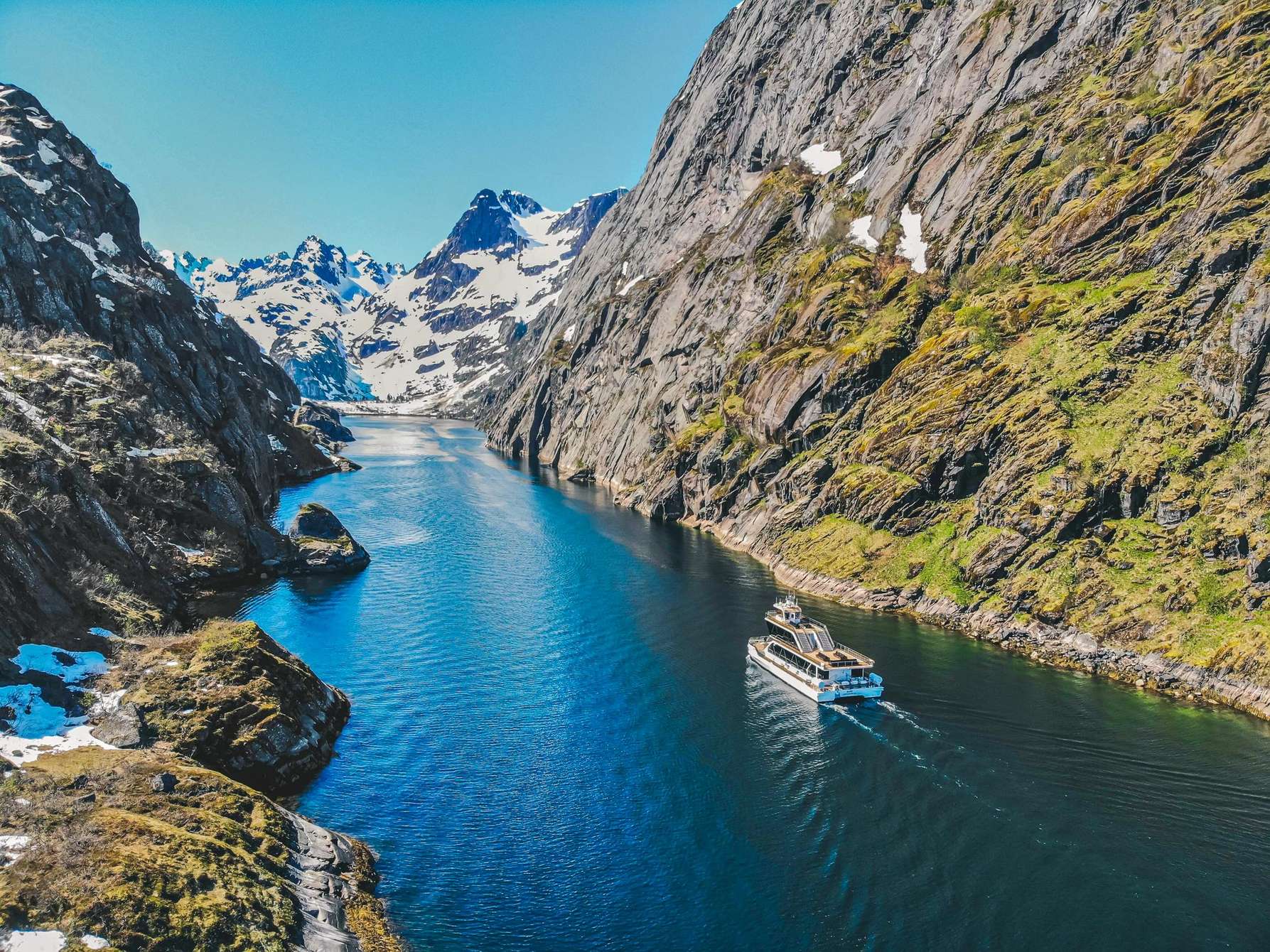
Silent hybrid-electric cruise to the steep-walled Trollfjord, watching for white-tailed eagles. 3.5 hours from Svolvær.
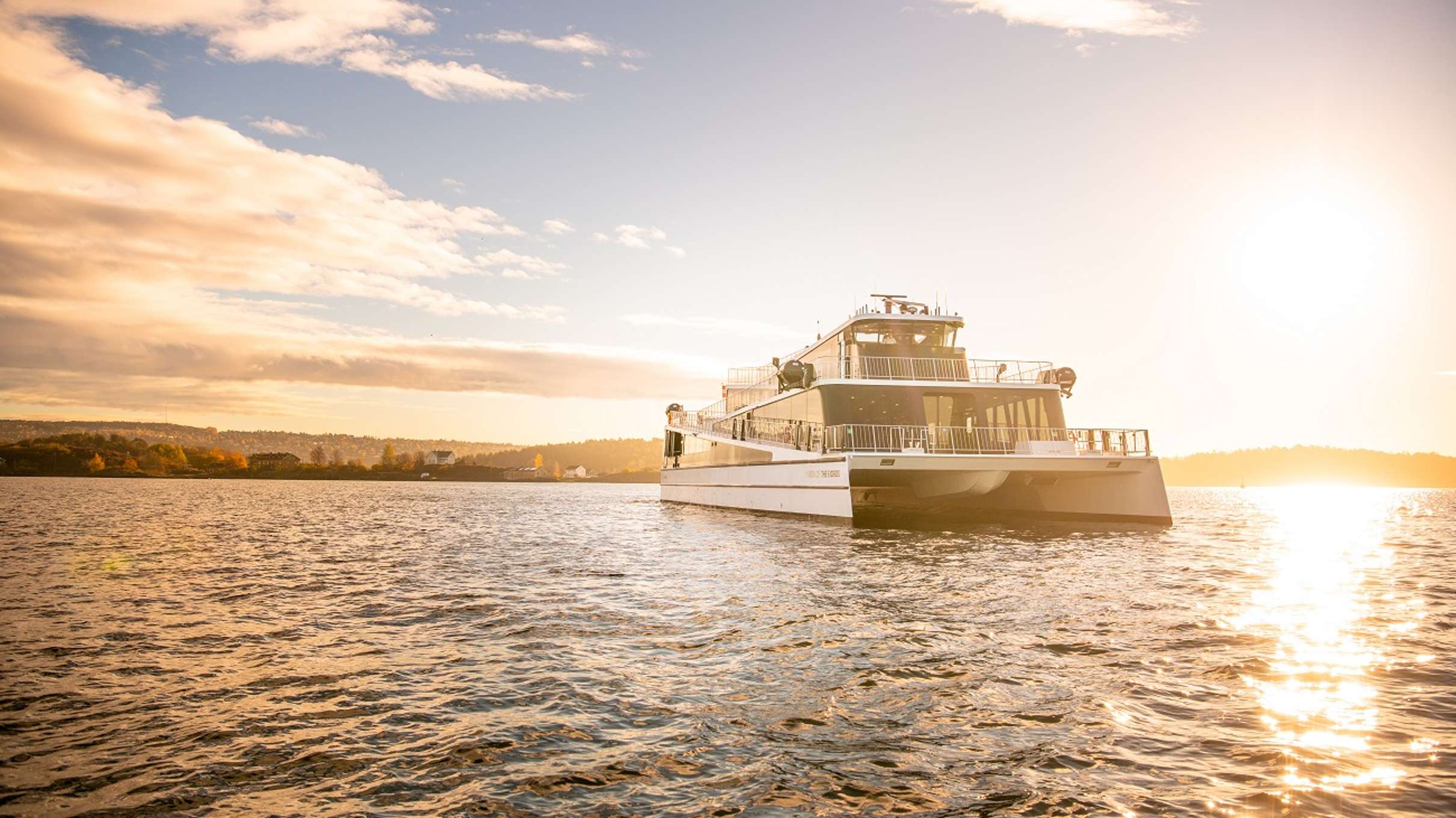
Relaxed cruise on the Oslofjord aboard a silent all-electric boat with audio guide — islands, fishing cabins and the city skyline from the water. About 1.5 hours.
Which ferries for…
Oslo
Two overnight routes arrive in the heart of Oslo, from Germany and Denmark. Inside the fjord, the Moss–Horten crossing cuts across the coastal road.
Bergen
Gateway to the western fjords. A direct route from Denmark, local crossings around the city, and departures for the Nærøyfjord and Mostraumen.
- Hirtshals – Bergen
- Halhjem – Sandvikvåg
- Krokeide – Hufthamar
- Klokkarvik – Hjellestad
- Breistein – Valestrand
Stavanger
The starting point for the Lysefjord and Preikestolen. An overnight route from Hirtshals, and the Mortavika–Arsvågen ferry on the E39 towards Bergen.
Ålesund
The Art Nouveau town, in the middle of the densest ferry network in the country. Cruises to the Geirangerfjord and Hjørundfjord leave from here.
Tromsø
Above the Arctic Circle. Few car ferries a traveller actually needs, but the widest choice of boat trips in Norway — whales in winter, midnight sun in summer.
Kristiansand
The quickest way into Norway from the continent: 2 h 25 from Hirtshals, two companies on the same route. Few local ferries, but a maze of granite skerries right outside town, best seen by boat.
Norwegian ferries in five minutes
The ferry is not a detour, it is the road
In Norway the main road stops and starts again on the other side of the fjord. Car ferries are part of the road network: they often sail every twenty or thirty minutes, cannot be booked, and you drive up to them as you would a toll gate. On a trunk route such as the E39, four or five crossings can follow one another in a single day.
You pay automatically, by number plate
Almost every ferry runs on AutoPASS ferje: a camera reads the plate as you board and the fare is charged later. An AutoPASS ferry account opened in advance halves the bill on most routes. The fare depends on the length of the vehicle, not on the number of people in it — passengers travel free on domestic routes.
Booking only matters on a few routes
Domestic crossings are taken as they come, with no ticket. Booking exists only on a handful of busy routes, and on the international ones — where it is essential, especially in summer and especially with a cabin.
Summer and winter are not the same country
Some mountain and fjord routes only run from May to October; others cut their frequency sharply in winter. The times shown here come from the national real-time feed, which avoids unpleasant last-minute surprises.
Read before you go
Oslo, Kristiansand or Larvik
The three arrival ports of south-east Norway compared: crossing time, entry price, frequency and the road left to Oslo, Stavanger or Bergen.
Paying for ferries in Norway
The 2026 AutoPASS scale, the prepayment account at 50 percent off, FerryPay, invoicing for foreign plates and the 28 free routes.
Ferry to the Lofoten Islands
Four ferries reach the Lofoten Islands, and they do different jobs. Times, frequencies, fares and the road left — plus the fast boat from Tromsø.
The most beautiful fjord cruises in Norway
Day boat trips by port: Lysefjord, Nærøyfjord, Geirangerfjord, Trollfjord, whales in Tromsø. Prices from, reviews and the ferry on the same route.