Which ferry should you take to Norway?
There are only two ways to reach Norway by car: the road through Sweden, or a ferry. Eleven routes run from Denmark, Germany and Sweden. The shortest crossing takes 2 hr 25, the longest 20 hours, and fares range from €32 to €835 for a car. Only one of them will really suit you, and it depends above all on where you want to arrive.
What is the fastest ferry to Norway?
Hirtshals–Kristiansand, 2 hr 25 aboard the Fjord FSTR. It is the shortest crossing to Norway, and one of the few with several departures a day in summer. Close behind, Strömstad–Sandefjord takes 2 hr 30, but from Sweden.
Beware of a figure that gets quoted: Puttgarden–Rødby takes only 45 minutes, and it genuinely is the fastest of them all. Except that it links Germany to Denmark. It does not take you to Norway — it brings you closer to the ports that do.
What is the cheapest ferry to Norway?
Strömstad–Sandefjord, from €32 for a car. Three times less than the next cheapest, ten times less than Hirtshals–Bergen.
But the fare is not the cost of the journey. To board at Strömstad you first have to drive across Sweden: fuel, tolls, an extra day on the road. Coming up from western Europe, Hirtshals–Kristiansand (around €105) or Copenhagen–Oslo (from €125) often works out cheaper once everything is counted.
And there is one line nobody puts in the sum: an overnight crossing replaces a night in a hotel. On Copenhagen–Oslo, Kiel–Oslo, Hirtshals–Bergen and Hirtshals–Stavanger you board in the evening and step off the next morning. The cabin costs extra, but it compares with a hotel room, not with nothing.
Which ferry for your destination: Oslo, the fjords, the south?
So which one? It depends where you are going — and on what you are willing to risk.
- Oslo, without breaking the bank Copenhagen – Oslo
From €125 against €540 for Kiel. Departure 16:30, arrival 10:00: the night aboard replaces a hotel night. One departure a day, at the same time all year.
- Oslo from Germany, in one go Kiel – Oslo
The most expensive of the lot, and the only one that drops you in the heart of Oslo without going through Denmark. Departure 14:00, arrival 10:00 the next day. One a day as well.
- The western fjords, Bergen, the Sognefjord Hirtshals – Bergen
Board at 20:00, step off at 13:00 the next day, already in the right scenery. The other routes leave you a day’s drive short.
- Preikestolen and the Lysefjord Hirtshals – Stavanger
Same ship as Bergen, one call earlier: 20:00 to 07:00. You sleep, you arrive, you drive.
- Vestfold, and some flexibility Hirtshals – Larvik
Two return crossings a day, midday and evening. The only route from Denmark to eastern Norway where missing your sailing does not cost you the day. Watch the 22:15 departure: it lands at 02:00, so plan where to sleep.
- The south and Kristiansand Hirtshals – Kristiansand
The shortest crossing to Norway, but there are two ships and two durations: 2 hr 25 on the Fjord FSTR, 3 hr 55 on the MS Stavangerfjord, which leaves in the morning and takes its time. Four departures a day in summer. Only two in December, and a single one from January.
- You are coming through Sweden Strömstad – Sandefjord
From €32, two return crossings a day, unbeatable — provided you have already driven across Sweden, which is no small thing.
Do the timetables change between summer and winter?
On some routes, not at all. Copenhagen–Oslo and Kiel–Oslo sail at the same time all year, one departure a day from each port, winter included. Puttgarden–Rødby runs around the clock with no timetable to remember.
On others it changes everything. Hirtshals–Kristiansand goes from four departures a day in summer to two in December, then a single one from January — and the ship changes with it, so the crossing time does too. Rostock–Gedser also has a different grid by season.
And for two routes we have only recorded the summer grid: Hirtshals–Larvik and Frederikshavn–Gothenburg. We would rather say so than copy winter times we have not checked.
From Denmark: six routes, five of them to Norway
This is the best-served starting point, and the only one covering the whole Norwegian coast — from the south all the way to Bergen.
Copenhagen – Oslo Overnight crossing Denmark → Oslo · Go Nordic Cruiseline (ex-DFDS) Two capitals strung together by sea: you leave Copenhagen in the late afternoon and wake up in the Oslofjord.
⏱ 17 hours 30 minutes 🔁 1 departure a day in each direction, at 16:30 💶 from €125 to €410 See the detail Collapse
Anyone who wants to see Copenhagen and Oslo on the same trip, anyone carrying on to the fjords by the cross-country roads, and anyone heading home through southern Denmark.
Oslo, Akershus quay, right in the city centre.
- The run up the Kattegat happens overnight and the ship enters the Oslofjord at first light — the finest wake-up call of the eleven routes.
- Departure and arrival right in the city centre at both ends.
- Ideal for going up through Norway and coming back through Denmark, or the other way round.
- One departure a day, and a compulsory cabin.
- The Nordic Pearl goes into dry dock from 4 to 22 January 2027: the service is reduced over that period.
Hirtshals – Kristiansand Denmark → Southern Norway · Color Line / Fjord Line The shortest crossing between mainland Europe and Norway, and the only one where two operators compete for the same passengers.
⏱ 2 hours 30 minutes to 4 hours 🔁 Up to 4 sailings a day in summer, 1 to 2 in midwinter 💶 from €105 to €110 See the detail Collapse
Anyone driving up Jutland by car or motorhome, anyone travelling out of season, and anyone who hates the idea of an overnight crossing.
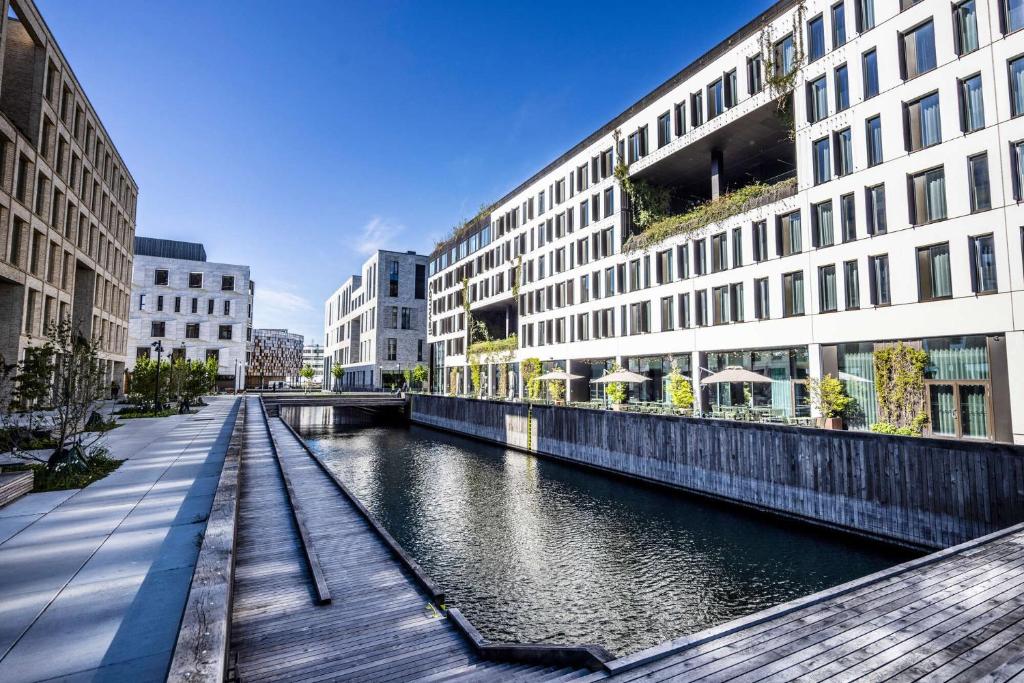
Kristiansand, on the southern tip of Norway. Oslo is 4 hours 30 minutes away by road, Bergen 7 hours.
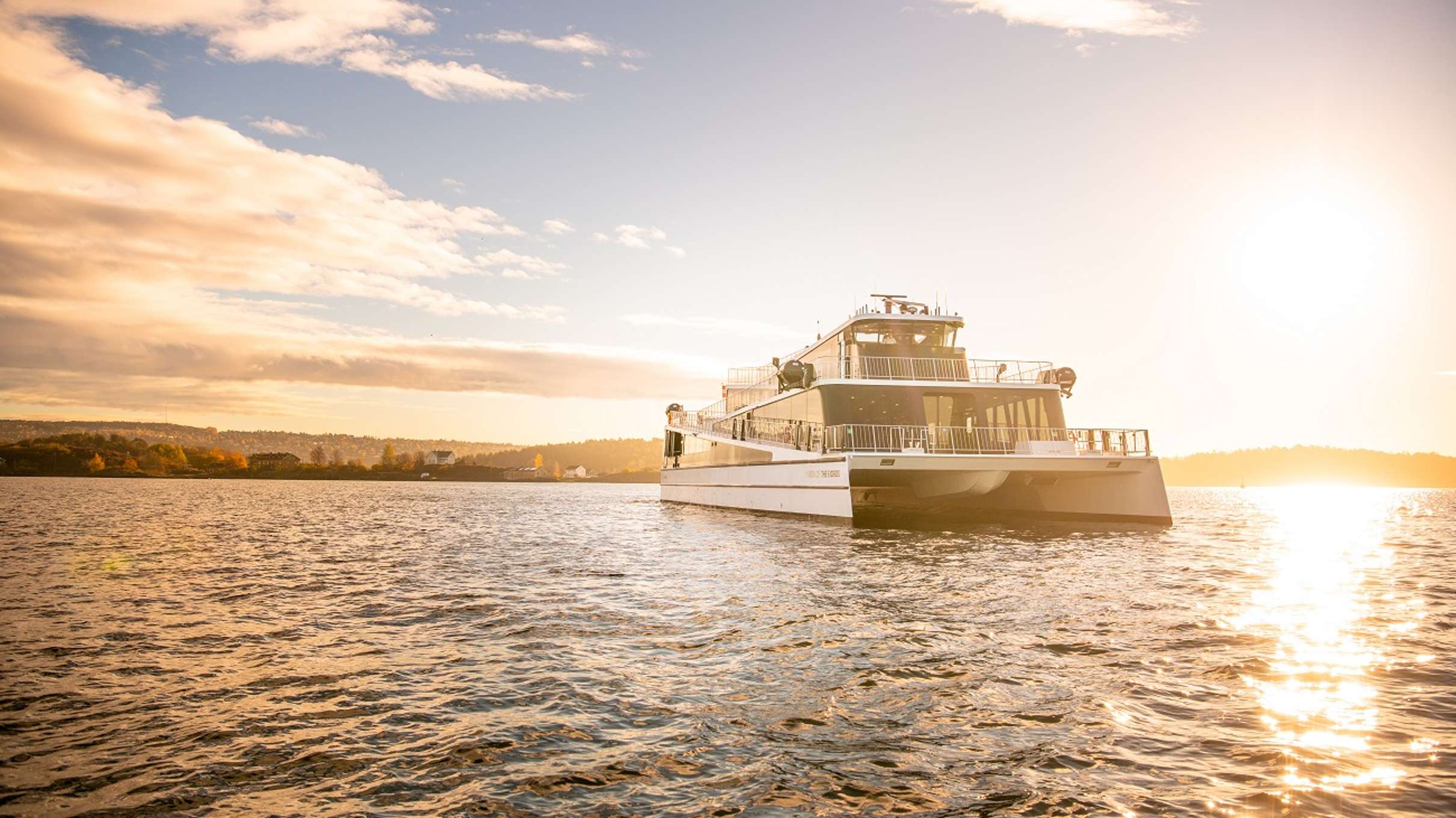
- Three ships, three speeds: the Fjord FSTR catamaran in 2 hours 25 minutes from March to October, the SuperSpeed 1 in 3 hours 15 minutes all year round, the cruise ships in 3 hours 55 minutes.
- No cabin to book: you leave Denmark in the morning and sleep in Norway that night.
- If one sailing is full, there is almost always another later the same day.
- Kristiansand sits on the southern tip: for Bergen you still have about 7 hours of coastal driving ahead, ferries included — as much as leaving from Oslo over the mountain roads.
- The busiest route of all in July and August since Langesund closed in 2023.

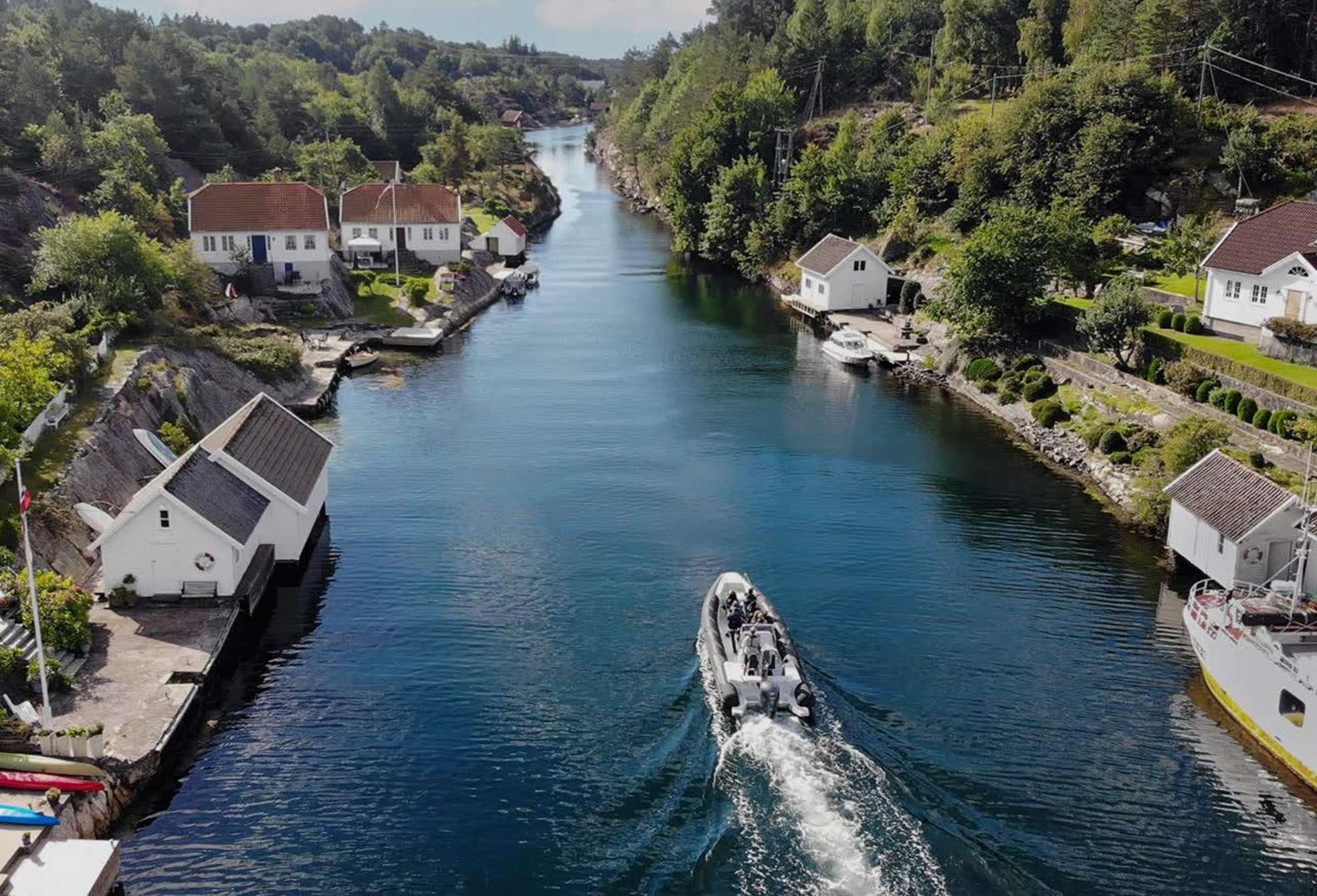
Hirtshals – Larvik Denmark → Vestfold · Color Line The same Danish port as the Kristiansand route, but you land less than two hours from Oslo instead of four and a half.
⏱ about 4 hours 🔁 2 departures a day in each direction in summer 💶 €163 See the detail Collapse
Anyone heading for Oslo, Vestfold or Telemark — but also anyone aiming for the fjords: from Larvik, the E134 runs towards Haukeli and Rogaland without going through the capital.
Larvik, in Vestfold. Oslo is 1 hour 45 minutes away by road.
- An extra hour and a half at sea saves you close to three hours of driving.
- The SuperSpeed 2 lands you straight in Vestfold, in the middle of the cabin coast.
- A night departure (22:15) that arrives at 2:00: the car is in Norway without a day lost — and it costs €35 less than the midday sailing.
- Only two departures a day, one at midday and one at night, and nothing in between — a rhythm the route also keeps in November, at the same times.
- Arriving at 2:00 means booking a hotel in Larvik or driving through the night.
Hirtshals – Stavanger Overnight crossing Denmark → Rogaland · Fjord Line You fall asleep in Denmark and wake up at the foot of the fjords: the night at sea replaces the day of driving up from Kristiansand.
⏱ 11 hours to 11 hours 30 minutes 🔁 1 departure a day in each direction, all year round 💶 from €270 to €550 See the detail Collapse
Anyone heading west for Preikestolen, the Lysefjord and the fjord road north — and anyone who would rather pay for a cabin than for a hotel plus a day behind the wheel.
Stavanger, right in the heart of fjord country. Preikestolen is 40 minutes away, the Lysefjord is next door.
- Departure at 20:00, arrival at 7:00: the crossing costs you nothing in holiday time.
- The cabin takes the place of a hotel night — weigh it against the price of a room plus the petrol.
- All year round, every day.
- The cabin is booked separately and it weighs on the total: €149 for the cheapest one for two, €210 with a sea view. Two reclining seats bring the bill down by €88, but the night is then spent in a lounge.
- Eleven hours at sea: if you get seasick, the Skagerrak is not always kind.

Hirtshals – Bergen Overnight crossing Denmark → Vestland · Fjord Line The same night boat as Stavanger, carried on to Bergen: the answer if the west is where you are really going.
⏱ 17 to 18 hours 🔁 1 departure a day in each direction, all year round 💶 from €320 to €575 See the detail Collapse
Bergen, the Sognefjord, the Hardangerfjord, and anyone who wants to begin the trip in the west rather than arrive there exhausted.
Bergen, capital of the fjords. The Sognefjord and the Hardangerfjord straight afterwards.
- You step ashore in Bergen without having driven a single kilometre in Norway.
- From Kristiansand, the same arrival point would have meant roughly seven hours of driving.
- Arriving at 13:00 leaves the afternoon for Bryggen, or for setting off into the Hardangerfjord.
- Seventeen hours at sea: this is the longest crossing on the list after Kiel.
- A single departure a day — miss it and you wait twenty-four hours.

Four of them leave from the same port, Hirtshals, at the northern tip of Jutland. If you are still undecided when you reach Denmark, that is where to head.
And a sixth, which does not go to Norway but leads there:
Frederikshavn – Gothenburg On the way to Norway Denmark → Sweden (northern gateway) · Stena Line No Norwegian port here, and yet this is often the fastest way into the far north: you land in Sweden and drive up on straight roads.
⏱ about 3 hours 45 minutes 🔁 3 sailings a day in each direction in summer: 8:00, 13:45 and 20:20 from Frederikshavn 💶 from €110 to €175 See the detail Collapse
Anyone heading for Nordland, the Lofoten islands, Finnmark or the North Cape — anything above Trondheim, when you want to get there quickly.
Göteborg, in Sweden. From there, the E45 and the E4 run north on fast roads.
- Swedish roads climb north far faster than Norwegian ones, which wind around every fjord.
- Three sailings a day in each direction at the height of summer — morning, early afternoon and evening: your trip does not hang on a single boat.
- Three ships in rotation: Stena Danica, Stena Jutlandica and Stena Vinga.
- You do not arrive in Norway: the whole length of Sweden still lies ahead.
- Three ticket classes — Economy, Flexi, Premium — and €43 between the cheapest and the most expensive departure on the same day: the fare depends as much on the time you pick as on the date.

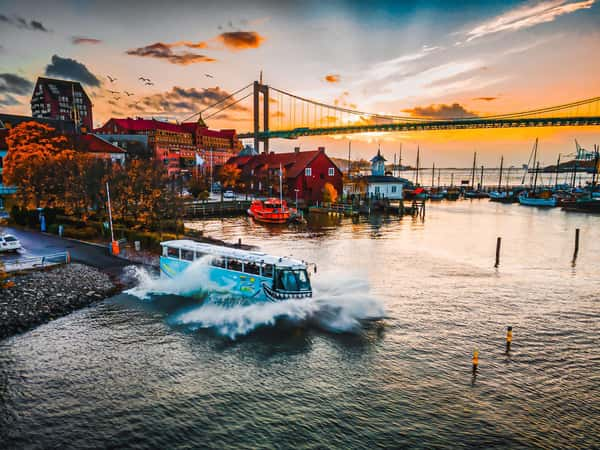
It lands you in Sweden, a few hours’ drive from the Norwegian border. This is the route for those who want to see Gothenburg on the way, or who would rather reach Oslo by land than by sea.
From Germany: one direct route, and three shortcuts
Kiel – Oslo Overnight crossing Germany → Oslo · Color Line You board in Germany and step ashore in the heart of Oslo: the whole drive up through Denmark disappears.
⏱ 20 hours 🔁 1 departure a day in each direction, every day at 14:00 💶 from €540 to €835 See the detail Collapse
Anyone setting off from Germany, anyone who wants to turn the journey into a mini cruise, and anyone heading for Oslo — from where the RV7 and the E134 put Bergen and Rogaland within a day's drive.
The Hjortnes quay, inside Oslo itself. Zero kilometres of driving on arrival.
- Around 900 km of driving and two Danish bridge tolls avoided.
- The Color Fantasy and the Color Magic are cruise ships: restaurants, shows, shops — the crossing is part of the trip.
- Departure every day at 14:00 from Kiel and from Oslo, all year round.
- By far the most expensive: €835 for two people, the car and the cabin on 15 August 2026, when Copenhagen – Oslo asks €408.50 for an equivalent package.
- Only one departure a day, and Kiel is a long way off if you are coming from southern Europe.

It is the only crossing linking Germany directly to Norway. It is expensive, it is long, and it saves you driving the length of Denmark and taking a second ferry.
The other three German routes do not touch Norway, but they cut the drive considerably:
Puttgarden – Rødby On the way to Norway Germany → Denmark · Scandlines The German link in the drive, outbound and homebound alike: forty-five minutes at sea instead of the long way round through Jutland.
⏱ 45 minutes 🔁 A continuous shuttle, 24 hours a day, all year round 💶 from €48 to €67 See the detail Collapse
Anyone driving up from Germany into Denmark, and anyone heading home through Copenhagen.
Rødby, on Lolland. Copenhagen is 1 hour 45 minutes away by road.
- No timetable to memorise: you turn up at the port and board the next sailing.
- Forty-five minutes, just long enough for a bite to eat — the crossing is over before you notice it.
- Coming back from Copenhagen, this is the shortest and most restful way out towards Germany.
- A ticket bought at the port costs far more: Scandlines advertises savings of up to 50% for booking online at least thirty days ahead.
- The Fehmarnbelt tunnel is due to open in 2029: this crossing has an expiry date.
Kiel – Gothenburg On the way to Norway Overnight crossing Germany → Sweden (northern gateway) · Stena Line The Kiel mini-cruise, except that it drops you in Sweden: board in the late afternoon, sleep, and wake up with a full day ahead.
⏱ about 15 hours 30 minutes 🔁 1 departure a day in each direction: 17:45 from Kiel, arriving 9:15 in Göteborg 💶 from €255 to €420 See the detail Collapse
Anyone setting off from southern Germany or Switzerland who wants to turn a night of driving into a night of sleep, and anyone heading up towards northern Scandinavia through Sweden.
Göteborg, in Sweden. Oslo is 3 hours 30 minutes away on the E6; the E45 runs north.
- You leave Kiel at 17:45 and step ashore at 9:15: the night replaces a day of driving, and costs the itinerary nothing.
- Two large ships in rotation, the Stena Germanica and the Stena Scandinavica — restaurants, bars and cabins in several categories.
- From Göteborg the Swedish roads climb fast: Oslo in 3 hours 30 minutes, and the E45 opens up the far north without a single fjord to drive around.
- You do not arrive in Norway: at least 3 hours 30 minutes of driving remain, and a great deal more if you are aiming west.
- Just one departure a day in each direction: if that ship is full, there is no fallback later the same day.
Rostock – Gedser On the way to Norway Germany → Denmark · Scandlines The eastern link in the journey: the one you take when you head north via Berlin rather than Hamburg.
⏱ 2 hours 🔁 Every 2 hours 15 minutes during the day in summer, roughly every 4 hours 30 minutes in winter; first sailing at 6:00 💶 from €65 to €138 See the detail Collapse
Anyone heading north via Berlin, Poland or eastern Germany, and anyone who would rather sit for two hours than drive for another one.
Gedser, on the island of Falster. Copenhagen is 2 hours away by road, Hirtshals 6 hours 30 minutes.
- Two hours at sea instead of forty-five minutes: on a long drive that is a genuine break, meal included.
- In summer, a sailing every 2 hours 15 minutes during the day, from 6:00 onwards — you can build your timings around it without contortions.
- From Berlin or eastern Germany, Rostock is far quicker to reach than Puttgarden: about a hundred kilometres less driving.
- Dearer and longer than Puttgarden – Rødby: €65 to €138 against €48 to €67, for two hours instead of forty-five minutes.
- The price doubles between November and August, while the Puttgarden shuttle moves by only 40%. Only Copenhagen – Oslo swings harder.
From Sweden: one route, the cheapest of all
Strömstad – Sandefjord Sweden → Vestfold · Color Line The Swedish crossing: two and a half hours to cut straight across the head of the Oslofjord instead of driving all the way round it.
⏱ 2 hours 30 minutes 🔁 2 sailings a day in each direction 💶 €32 See the detail Collapse
Anyone heading north through Sweden, and anyone coming back down from Oslo towards Göteborg and the south.
Sandefjord, in Vestfold. Oslo is 1 hour 30 minutes away by road.
- It cuts out the 170 km detour around the Oslofjord via Göteborg and the border.
- Short, no cabin, two sailings a day in each direction.
- The natural companion to Frederikshavn – Göteborg for anyone driving north through Sweden.
- You have to be in Sweden already: from France or Germany that means crossing Denmark or taking the Øresund bridge.
- The 2027 dates are not open for booking yet.

The Color Hybrid crosses the Skagerrak twice a day. Nothing beats it on fare alone, and it is the obvious choice if your route was going through Sweden anyway.
Dynamic pricing: it depends on the date, the departure time and how far ahead you book. This figure gives an order of magnitude, not a guaranteed fare.