Denmark → Norway by ferry the five routes, and which one is yours
Yes, you can take a ferry from Denmark to Norway — it is in fact the normal way to get there by car, and there are five of them. Four leave from the same port, Hirtshals, at the northern tip of Jutland; the fifth leaves Copenhagen. So the real question is never "which ones exist" but this one: a short crossing then a day at the wheel, or a long crossing you sleep through? Everything else follows from that, price included.
The short answer
- You're driving on, and cost matters
- Hirtshals–Kristiansand The shortest, the cheapest, the most frequent. It is the default choice, and for good reasons.
- You're heading for Oslo and the south-east
- Hirtshals–Larvik You land in Vestfold, an hour and a half from Oslo, instead of driving the whole southern coast up from Kristiansand.
- You want to wake up in the fjords
- Hirtshals–Bergen One night aboard and you are in western Norway by lunchtime, without having crossed the country by road.
- Same idea, for Rogaland
- Hirtshals–Stavanger The same ship, six hours earlier: Preikestolen and the Lysefjord are within reach the moment you dock.
- You have no car
- Copenhagen–Oslo A cruise ferry between two capitals, cabin included. It is the only one of the five that stands up without a vehicle.
The five routes, one by one
-
Hirtshals – Kristiansand
Color Line / Fjord Line
- 2 hours 30 minutes to 4 hours
- €105–110
The shortest and cheapest, and the only crossing where two operators fight over the same quay. You land where the south coast begins, with the day still ahead of you.
-
Hirtshals – Larvik
Color Line
- about 4 hours
- from €163
Same Danish port, but the ship covers two hundred kilometres of coast while you sit still: when you dock, Oslo is barely an hour and a half away.
-
Hirtshals – Stavanger
Fjord Line
- about 11 hours 45 minutes
- overnight crossing
- €270–550
The night boat. You board after dinner, you sleep, and you step off at the foot of the Lysefjord — the day's drive up from Kristiansand replaced by a cabin.
-
Hirtshals – Bergen
Fjord Line
- 17 to 18 hours
- overnight crossing
- €320–575
The same ship as Stavanger, which simply carries on. This is the answer when the west is where you are actually going and you would rather not cross the country by road.
-
Copenhagen – Oslo
Go Nordic Cruiseline (ex-DFDS)
- 17 hours 30 minutes
- overnight crossing
- €125–410
A cruise ferry between two capitals, cabin included in the fare. The only one of the five that makes sense without a car, because it links two city centres.
Hirtshals, the crossroads
Four of the five routes leave from Hirtshals, a Danish fishing port at the very top of Jutland. That is no accident: it is the point of the continent closest to Norway, and two operators share all the traffic there, Color Line and Fjord Line. From Hirtshals you can aim at four different Norwegian cities on the same vehicle ticket.
The practical consequence is that your choice is made when you reach Denmark, not before. Whether you drive up from Germany, the Netherlands or France, the road to Hirtshals is the same whichever crossing you then take. What changes is where you put the wheels back on tarmac — and how much road is left afterwards.
Short and drive, or long and sleep
The two short crossings — Kristiansand and Larvik — put you in southern Norway in an afternoon. They run often, they cost noticeably less, and they leave you the day to drive. Their weakness is the mirror image of their strength: you land where Norway begins, not where you were going. For the western fjords or the north, there is road left, and it is beautiful but long.
The two long ones — Stavanger and Bergen — are the same ship, carrying on. You board in the evening, you sleep, and you land the next day on the west coast. What you are paying for is not only the crossing: it is a hotel night you will not book and a day's driving you will not do. Compare the fare with those two costs rather than with the Kristiansand fare, and the arithmetic looks very different.
Copenhagen–Oslo sits apart. It is a cruise ferry, it sails overnight between two capitals, and it is the only one that means anything to someone travelling without a car — the other four land you in ports where you need a vehicle.
What to know before you book
Timetables move with the season, a lot. Hirtshals–Kristiansand goes from two to four sailings a day in each direction depending on the period — seven different periods across the year at Fjord Line alone. Someone reading this in October and someone reading it in July are not looking at the same route. That is why our route pages query live times rather than printing a fixed grid.
The durations operators advertise are not always the ones in their own timetables. Color Line advertises 3h45 on Hirtshals–Larvik; no regular sailing takes 3h45 — the grid gives 3h55, 4h00 or 4h25 depending on the departure. We publish the grid, not the sales pitch.
Booking is compulsory on all five, with or without a vehicle, and fares are dynamic: the same crossing can double between a Tuesday in November and a Saturday in July. The ranges shown above are observed starting points, not guaranteed prices.
Staying in Hirtshals the night before
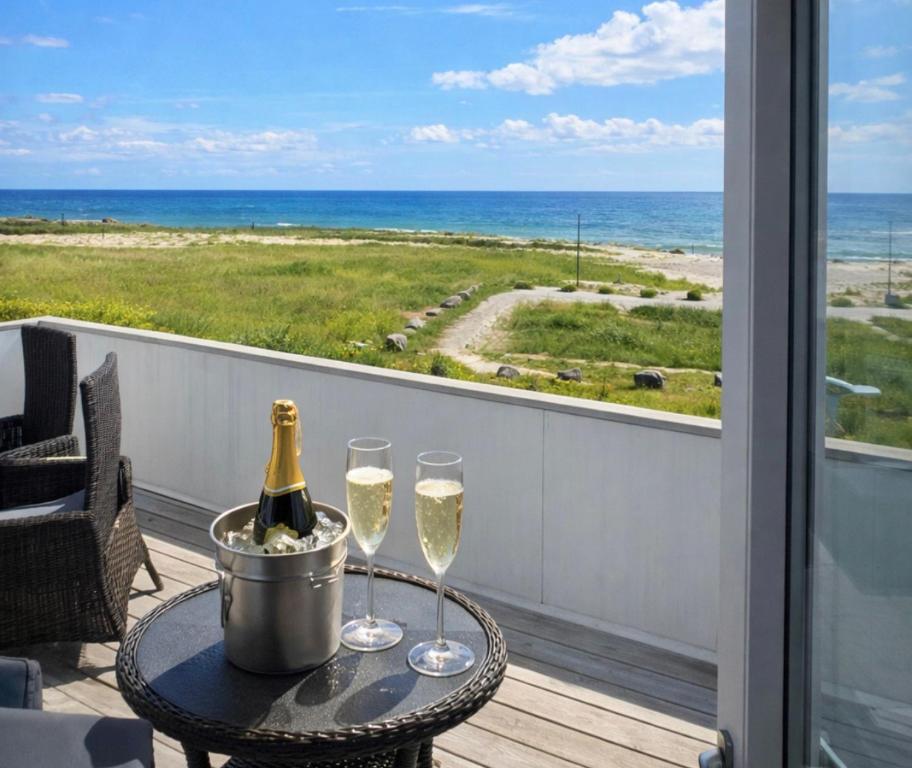 B&B by the Sea Hirtshals
 Skaga Hotel
Staying in Copenhagen the night before
 Residence Inn by Marriott Copenhagen Nordhavn
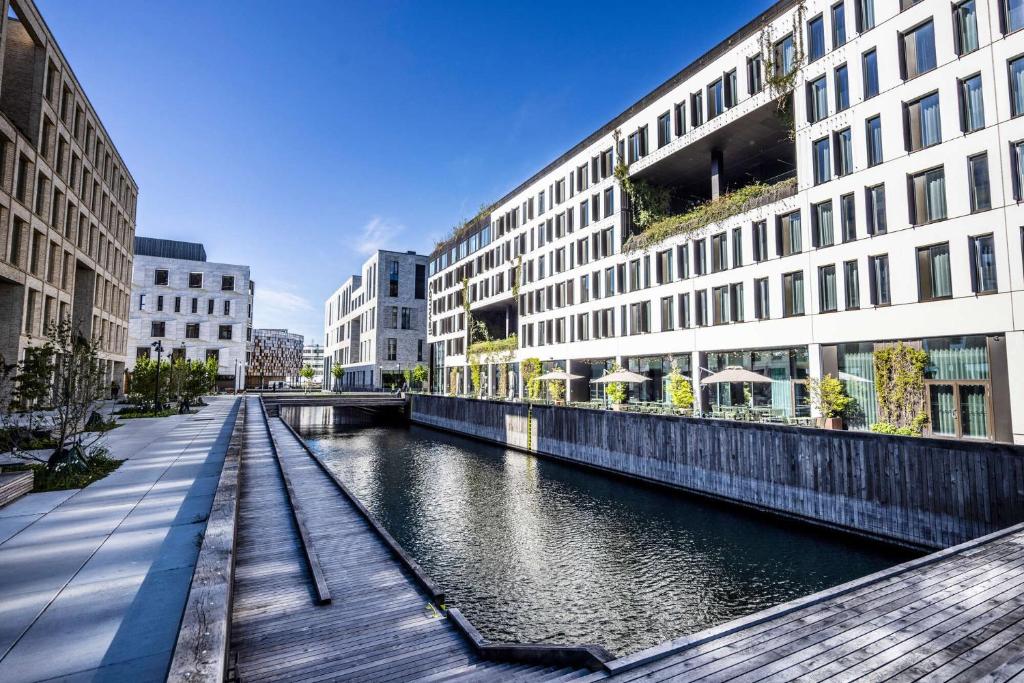 Comwell Copenhagen Portside Dolce by Wyndham
What is waiting on the other side
-
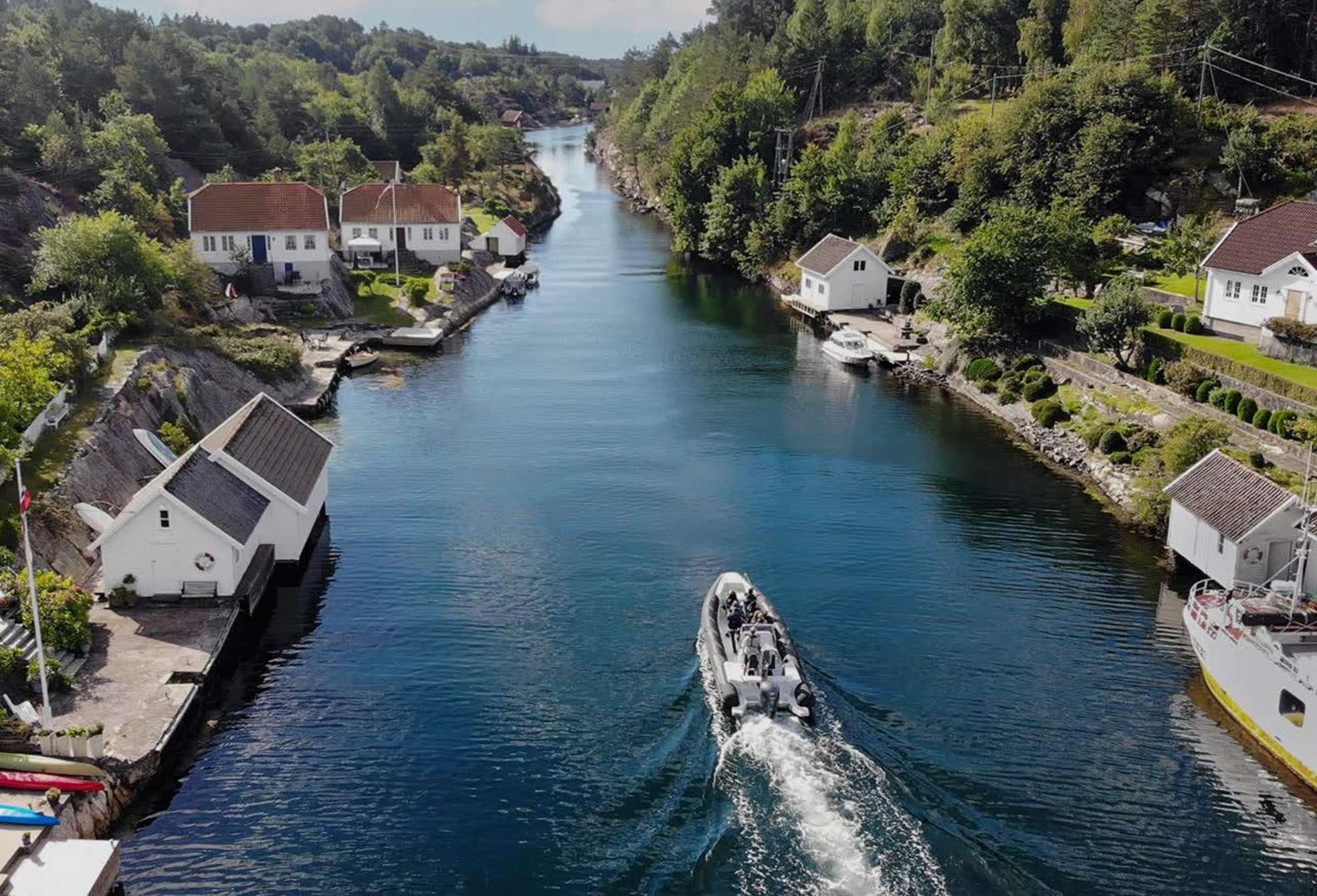 Kristiansand Fast RIB cruise through the Kristiansand skerries 5,0/5 · 416 reviews 91 €/pers.
-
 Stavanger Electric cruise to the Lysefjord and Preikestolen 4,6/5 · 9 730 reviews 65 €/pers.
-
 Bergen Guided walking tour of Bergen 4,9/5 · 1 749 reviews 23 €/pers.
-
 Oslo Oslo: island-hopping nature walk in the fjord 4,8/5 · 3 141 reviews 45 €/pers.
Frequently asked questions
Can you get from Denmark to Norway by ferry?
Yes — five scheduled routes do it all year round. Four leave from Hirtshals, in northern Jutland, for Kristiansand, Larvik, Stavanger and Bergen; the fifth links Copenhagen to Oslo. None is seasonal: they sail in winter as in summer, at reduced frequencies.
Which crossing is the shortest?
Hirtshals–Kristiansand. The regular sailings take 3h15 to 3h55 depending on the operator and the departure. Fjord Line's fast catamaran is advertised at 2h30, but it does not run all year — check it is actually offered on your date before counting on it.
Do you need a car for these ferries?
No, all five take foot passengers. But four of them land you in ports you leave by car: without a vehicle, only Copenhagen–Oslo, which links two city centres, really stands up.
Is a long crossing better than driving?
It depends where you are going. For southern Norway, a short crossing followed by a day on the road costs less and lets you set your own pace. For Bergen or Stavanger, the overnight crossing saves you a hotel night and a long day at the wheel — compare the fare with those two, not with the Kristiansand fare.
Can you take a motorhome?
Yes, on all five. The fare depends on the length of the vehicle rather than the number of passengers, and it is booked in advance just like a car — high-clearance spaces are limited and go early in summer.
Other ways into Norway
Denmark is not the only door: there are also sailings from Germany, at Kiel, and from Sweden, at Strömstad.